CASE STUDY
CornellGo
CornellGo is a mobile app that helps students discover campus landmarks, traditions, and stories through interactive scavenger hunt journeys.
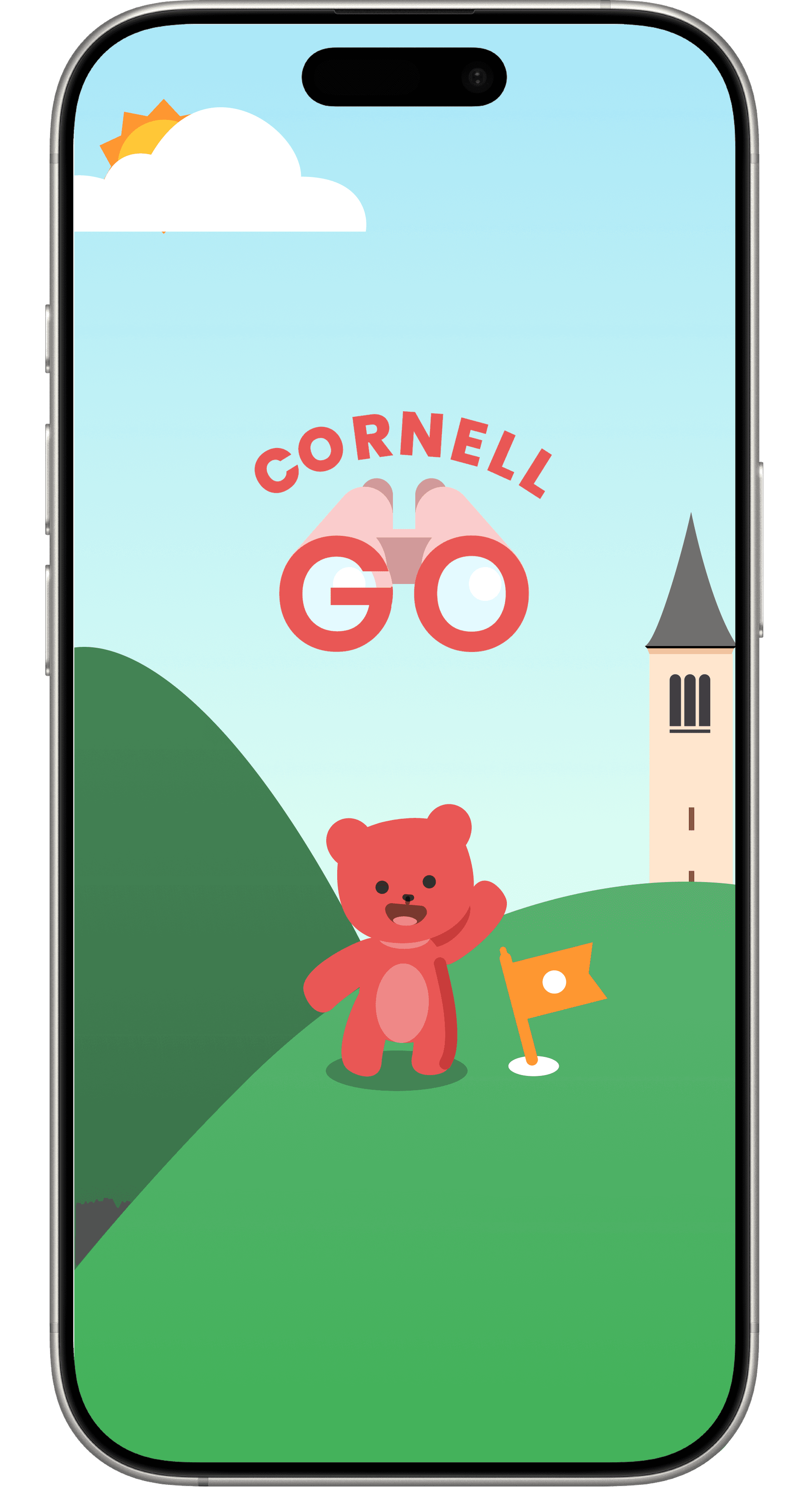
Imagine it's your first week on campus.
While new students are physically present on campus, many struggle to feel truly connected to it. The buildings, traditions, and stories around them stay unfamiliar long after move-in day.
CornellGo was created through Cornell Digital Tech & Innovation (DTI), Cornell's student-led product development organization, to help students build a deeper connection with campus through interactive, location-based experiences.
I worked as the Product Designer on our cross-functional team, partnering closely with product managers and engineers to design and launch the product from 0 → 1. I led the design of key features, conducted user research, and shaped the end-to-end experience.
01 — The problem
Exploration felt optional, not rewarding
Usability testing before launch showed the existing gameplay felt static and repetitive.
Passive interactions
Tapping through content felt like reading, not playing.
Limited progression
Little sense of challenge or advancement across a hunt.
Low motivation
Nothing pulled students back to keep exploring.
Weak engagement loops
No feedback loop rewarded continued play.
How might we turn passive exploration into active, rewarding play?
02 — Design process
Designing with students, every step of the way
Every decision traced back to direct conversations with the students CornellGo was built for.
User Research
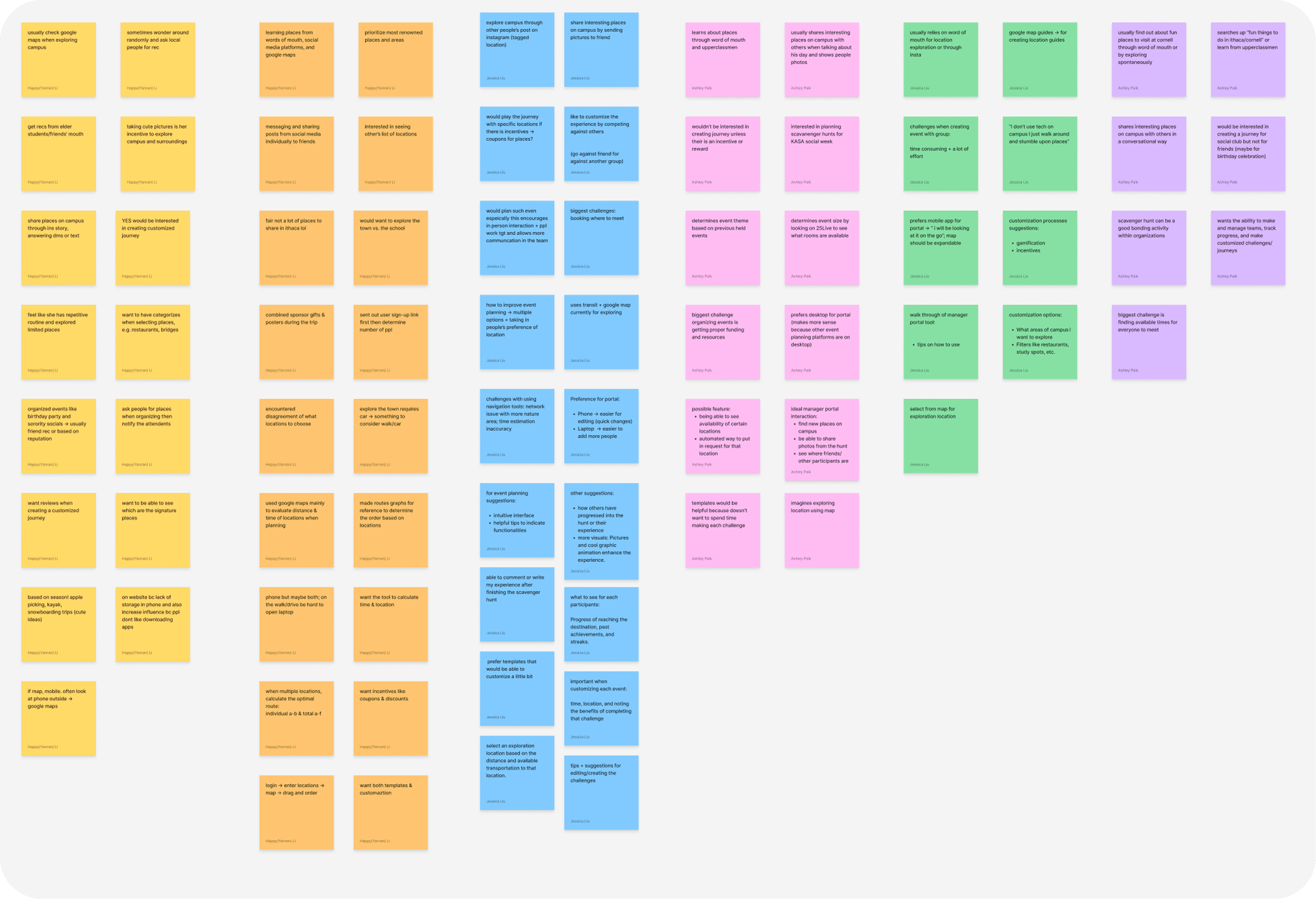
12 interviews with Cornell students to understand how they actually explore campus.
Brainstorming
Cross-functional ideation on what would make exploration feel like play.
Prototyping
Mid- and hi-fi flows built and iterated with engineering in the loop.
User Testing
Moderated sessions validating the timer, quiz, and AR interactions.
03 — User research
What students actually wanted
Different students, different motivations, but they all wanted a reason to keep exploring.
Curious First-Years or Transfers
Students looking for an easy, low-pressure way to become familiar with campus.
Social Explorers
Students who enjoy shared experiences, group challenges, and exploring with friends.
Campus Insiders
Upperclassmen interested in sharing recommendations and creating experiences for others.

“Students struggle with discoverability, not interest.”
“Recommendations are scattered across different platforms.”
“Existing navigation tools aren't designed for exploration.”
“Users want stronger incentives and more engaging interactions.”
04 — Competitive analysis
What's already out there?
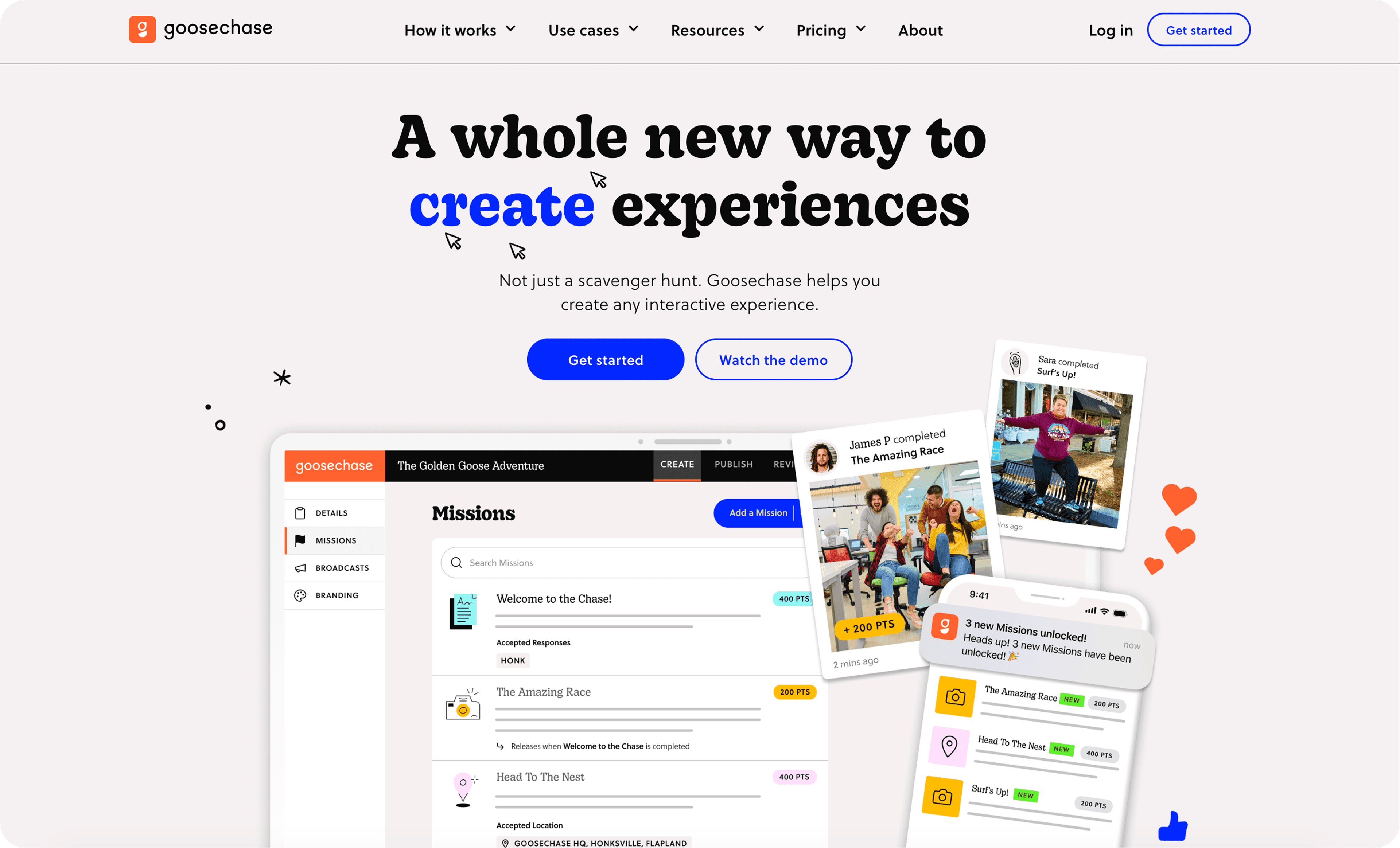
Goosechase
What Goosechase does well
Goosechase's emphasis on variety and social play directly shaped CornellGo's direction. Challenges needed formats beyond simple checklists, and progress needed to feel shared, not solitary.
- Multiplayer gameplay
- Varied challenge formats
- Customizable scavenger hunts
- Stronger engagement loops
05 — Solution space
Turning features into one experience
Designed to feel like connected journeys, not a collection of isolated screens.
Engagement through play
Every challenge feels like a game
Timed challenges, quizzes, leaderboards, and celebration moments turn exploration into momentum, where each step rewards the next.
- Motivation
- Momentum
- Rewarding exploration
The engagement flow
- Home
- Challenge
- Timer
- Quiz
- Leaderboard
- Completion
Augmented discovery
Discovery you can point your phone at
AR bridges digital and physical exploration, layering context directly onto the campus around you to make discovery more memorable.
Journey creation
Let students build their own hunts
Students create and share their own scavenger hunt journeys, turning CornellGo from a one-time activity into a community-driven discovery platform.
The creation flow
- Create Hunt
- Add Challenges
- Set Landmarks
- Publish
- Friends Join

06 — User testing
Putting the redesign to the test
10 students evaluated the redesigned experience.
10
Users evaluated
100%
Completed the timer + AR challenge without assistance
100%
Found quiz integration intuitive
Overall experience rated intuitive.
A few minor UI tweaks were still needed in the manager portal.

07 — Reflection
From Figma file to the App Store
CornellGo launched on the Apple App Store, taking it from a design concept to a real product students actually use. From here, the team will keep monitoring engagement, gathering feedback, and iterating on the experience.
Designing Within a System
Building within an existing design system taught me to value consistency and scalability over one-off solutions.
Working Cross-Functionally
Collaborating closely with engineers pushed me to think past visuals and weigh feasibility, edge cases, and implementation.
Staying Flexible
Designing AR experiences meant a lot of iteration, adapting ideas to technical constraints without losing what made the experience feel special.

08 — Next steps
What's Next for CornellGo
CornellGo is an evolving product, not a completed project.
- 01
Monitoring engagement after launch
- 02
Designing additional edge cases
- 03
Completing documentation and handoff
- 04
Iterating based on user feedback
EXTRA
Behind the Build
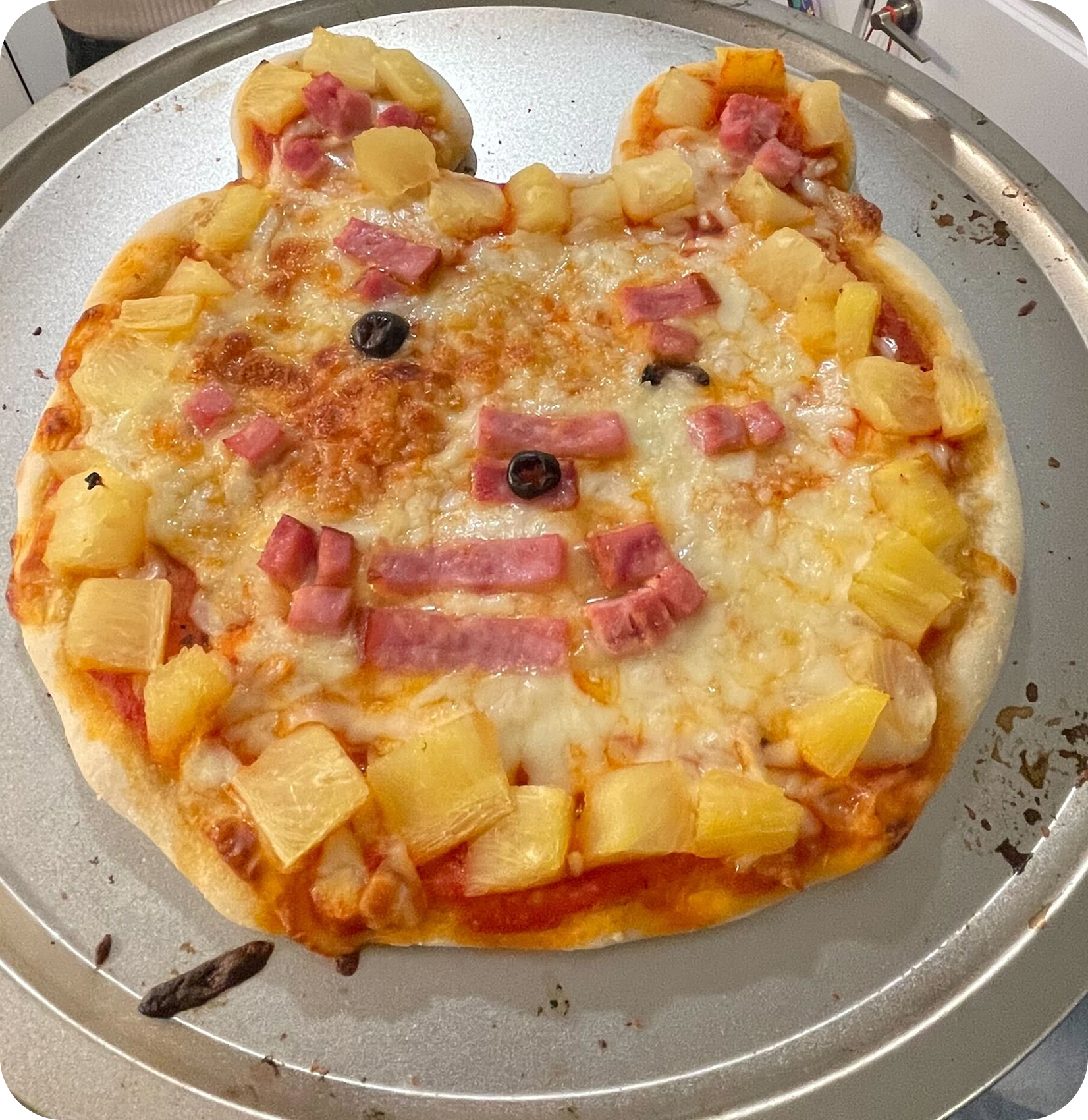
our mascot, nikki the bear 🍕
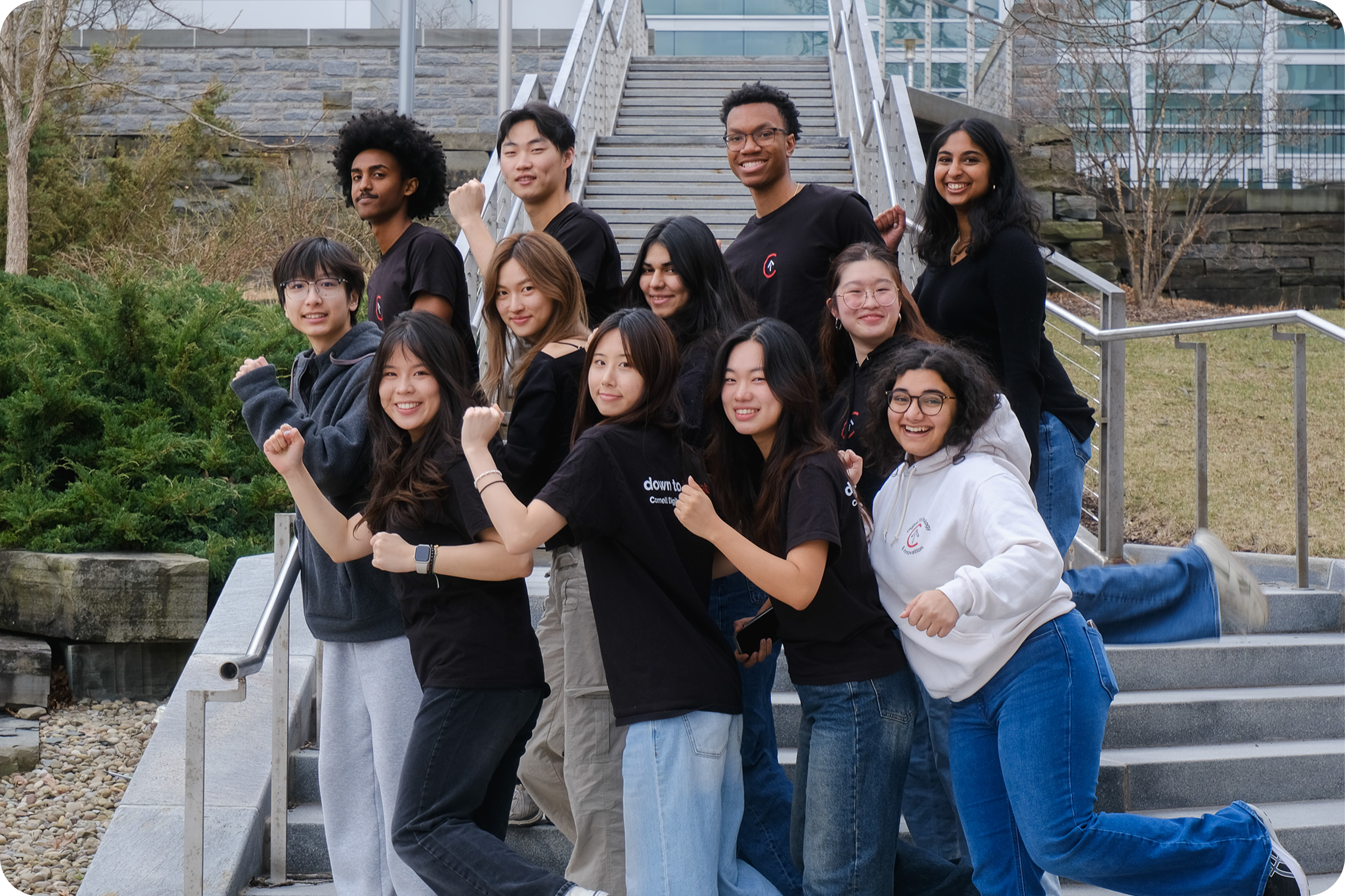
the team!
Keep exploring